14 Secrets for Making House Cleaning a Breeze

Tackling a messy home can take forever. In fact, our homes often get so messy because we just don’t have time to keep things clean. 

Tips for making house cleaning easy

However, the less you clean, the more chaotic your home becomes, making it a monster of a mess that takes hours to finish. 

The best way to avoid this situation is to clean often, so it takes up less time. 

If you find that you can’t keep on top of your house cleaning, in this article, we offer 14 secrets to help make house cleaning a breeze.

1. Avoid clutter

If you can avoid clutter, your cleaning jobs won’t seem so overwhelming. If you first do a massive decluttering, it becomes easier to manage the mess every day so it doesn’t start to accumulate again. 

Simple daily tasks like putting dirty clothes in the laundry, hanging up clothes you can wear again, tossing items like old newspapers or junk mail, and putting things back where you found them will help avoid clutter.

2. Clean surfaces

With clutter out of the way, you create a clear path that makes vacuuming, dusting, and wiping surfaces easier.

Clean things like bathroom and kitchen counter every day by keeping wipes handy. Dust surfaces every week or two, and sweep the kitchen floors daily. 

Follow up with a quick vacuum once a week, and you’ll find that your home will look pretty good.  

3. Clean in sections

Sometimes, when a mess seems too overwhelming, you can get distracted by other tasks that seem easier or more urgent. This can lead to a haphazard cleaning method that has you moving across the room from one mess to another. 

A better approach is to choose a corner of the room, start tidying, and make your way around the room in a more organized fashion. 

This way, you achieve more because you’ll see a distinction between the tidy areas you’ve finished and the spaces you’ll tackle next.

4. Work top to bottom

Cleaning can be frustrating if you find that you clean one thing, and then it gets dirty when you clean something else. 

A good rule of thumb is to work from top to bottom, so you send messes like dust or drips from cleaning products downward. 

That way, you leave a clean trail and catch all the mess as you work your way to the floor.

5. Make a cleaning caddy

You can also get distracted if you have to keep running around for different cleaning products or toss things in the garbage. Make a cleaning caddy with cleaning products, a duster, clean rags, etc., so you have everything you need as you work. 

Include a garbage bag to throw out dirty paper towels and wipes or for anything else you need to toss as you clean.

6. Stay on top of bathroom “ick”

Bathrooms are the worst spaces to clean for obvious reasons. To avoid one major, gross cleaning in the bathroom, stay on top of the bathroom “ick” factor. 

First, use an automated toilet cleanser to reduce odours and avoid dirty rings and stains. Next, ensure everyone cleans under the toilet seat and rim with a toilet brush after unfortunate “incidents” that tend to leave messes that can cake on.

Use a shower spray cleanser after each shower to reduce bathroom scum and mildew. Keep disinfectant wipes on the bathroom counter so people can wipe the tap, sink, and counter after finishing their hygiene regime.

7. Do quick vacuum runs

If you have carpeting, do quick vacuum runs every few days in high-traffic areas. 

This will reduce buildup that makes rugs look dirty while also getting rid of debris that gets tracked through your home or kicked up into the air.

8. Use a wet mop

Wet mop products like Swiffer can be used daily in the bathroom or kitchen to remove drips and drops. 

Although you might not do it every day, if you use this simpler approach to mopping, your job becomes easier, and your floors look cleaner. 

Always work backwards so you don’t wash yourself into a corner and find yourself trapped and staring down at your wet, clean floors.

9. Invest in a squeegee

Squeegees are a handy tool that help glass and tile shine! A great tip for keeping showers clean is to use a small squeegee to wipe down the walls after each shower. 

This takes seconds and removes the damp and soap scum, so it never builds up. If you have a glass shower, this is also the best way to keep the shower doors and walls clear of water drops. 

You can also use the squeegee on your windows and mirrors for a streak-free clean.

10. Kill bathroom mould and mildew

A squirt of vinegar is a great way to combat stinky, dirty mould and mildew in your bathroom. It is also the best way to avoid mineral deposits on your bathroom faucet and shower head.

11. Wipe sinks with mineral oil

Mineral oil is great in sinks, as it repels water and stains. It can also be used in the bathroom to avoid those unsightly lumps of dried toothpaste (yuck).

12. Clean the microwave with every use

Well, maybe you don’t have to clean it with every use, but you know what we mean. 

Those drips are usually noticeable, so don’t leave them to crust up. Instead, just wipe it up rather than hiding your mess for the next person to find!

13. Maintenance clean

As you follow these tips, you’ll find that your home looks much cleaner and for longer. When you see messes appear, do quick maintenance to keep things under control.

14. Hire a professional home cleaning service

If you don’t have time to clean, don’t let it become a completely unlivable space that you’d see on a show like Hoarders

Instead, call a Toronto cleaning company to help keep things under control. A weekly or even monthly clean by professionals is an affordable, stress-free way to keep your home clean. 

You can then come home to a relaxing atmosphere free of odours, germs, and general chaotic clutter. If you’d like to learn more about using a Toronto cleaning company, click here to see Maid4Condos’ basic cleaning package. You can call us at 647-822-0601, or contact us online.

How to Clean Your Laundry Room

Laundry rooms are often one of those out-of-sight out-of-mind areas of the home. You don’t love spending time there, so you’re in and out without giving much thought to them. Still, like any area of your home, the humble laundry room needs some TLC every now and then. If you’ve never cleaned your laundry room, we’re not surprised—most people don’t. 

Tips for cleaning the laundry room

However, a clean laundry room is more pleasant, more sanitary, and most of all, more efficient. Efficiency means spending less time doing laundry and less wasted energy. Here, we offer tips on how to clean your laundry room once a month in order to keep it running like a well-oiled machine!

Clean the Washer

You might be thinking, isn’t the washer always clean? It actually has the word “wash” in its name! Although your washer does run with soap and water, it also can get gummed up in its hoses. As well, if you have a front loader, the rubber door seal can get mouldy and start to stink. To clean your washer, follow these steps:

  • Run an empty cycle using two cups of vinegar and hot water to flush out the hoses.
  • Dip a clean cloth in a mix of vinegar and water, and wipe down the inside of the machine.
  • Do a final run using just hot water.
  • Wipe down the entire exterior using an all-purpose cleaning wipe or a spray cleaner and a clean cloth.
  • Clean the little trays for fabric softener or detergent to remove residue.
  • Pull out the washer from the wall, and vacuum up all the dust and dirt, being careful not to loosen or knock the hoses.

If you have a front-loading washer, you should also use a special cleaning product like Affresh once a month to remove residue that causes mould.

Clean the Dryer

Hopefully, you are removing the lint from the lint screen/trap with every load. This is very important for energy efficiency because the lint build-up actually reduces function. It also poses a serious fire hazard. As well, a full lint screen allows lint bits to get into the laundry as it dries, thus damaging your clothes. You can clean your dryer using these steps:

  • Dryers have the one screen or lint trap inside the drum area, as well as another trap that is either on the dryer’s back wall or on the top right corner of the dryer. They should just slide up or out, so you can remove the lint. Using a vacuum does the best job.
  • Check the drum for stains from things in peoples’ pockets like crayons, pens, gum, etc. The stains should be removed, or they can actually stain your clothes. Wipe them down with a good quality cleaner as best you can.
  • Wipe down the exterior like you did with the washer.
  • Move the dryer out gently so you can vacuum.

We also recommend having annual professional maintenance for your dryer to clean out the vent in order to reduce risk for fires and keep your machine more energy efficient.

Clean Small Laundry Appliances

This is a good time to also clean small laundry appliances such as irons or steamers. Irons can get a gummy residue that transfers to clothes when the iron heats up. To clean your iron, follow these steps:

  • Clean the iron using dish detergent, or vinegar and baking soda if it’s really gummy.
  • Fill the reservoir with distilled water and then set it on “high” to let the steam clear out the vents.
  • If you have a steamer, clean it using vinegar and then set it on “high” to clear out the debris.

You can also toss your ironing board cover in the laundry to give it a good cleaning.

Clean the Counters and Cabinets

If you have a small laundry room, you won’t have to worry about this step. The average condo laundry room is either just a closet or has very limited space that only fits the washing machine and dryer. If you do have counters and cabinets, you can wipe them down with the same cleaner you use in the kitchen.

Dust the Floors and Ceilings

Laundry rooms are notorious for dust bunnies thanks to all that lint. You want to keep dust to a minimum because it can really gum up the works of your laundry machines. Use a vacuum to remove dust, dust bunnies, and cobwebs starting at the ceiling and working your way down. Get into nooks and crannies, and don’t forget the baseboards. If you have storage shelves, be sure to use a feather duster on them as well.

Clean the Floor

Your last step is washing the floor with a clean, fresh mop. All the dust and debris are out of the way, so you won’t just wet it and move it around with the mop. Follow these steps:

  • Move out things like hampers and drying racks so you don’t have any obstacles in your way.
  • Work your way from the farthest point from the door and back. 
  • Let the floor air dry before you put everything back in the room.

Make sure you use the right cleaning product for your floor type.

Check Your Supplies

While you’re cleaning, check your supplies to make sure you have detergent, fabric softener, and dryer sheets. You can make a note of anything you’re running short on, and then restock your supplies the next time you go shopping.

Bonus Cleaning Tip: Freshen Your Laundry Hamper

Laundry hampers can hold onto the odour of dirty clothes. Since you’re going to wash the clothes anyway, this might not seem like a big deal. However, a stinky hamper can leave a smell in the room. If your hamper has a removable cloth laundry bag, consider tossing it in the laundry along with your clothes. 

You can also wipe down plastic laundry hampers and baskets with a clean rag and an all-purpose cleaner to keep them clean. Wicker baskets can be left in the sun for a natural odour-fighting solution. Just make sure they are left in a dry area.

If these laundry room cleaning tips sound like a hassle, our house cleaning services at Maid4Condos can take on the job for you. Speak to our team today at 647-822-0601, or click here for a quote.

13 Easy Ways to Keep Your Toilet Clean

The one thing in our home we should all be obsessed with cleaning is the toilet. If you live alone, you draw the short straw every time and have to scrub that toilet eventually. However, busy households are much worse because there are more people contributing to those horrifying germs and stains.

How can you keep your toilet clean?

Although cleaning the toilet is nothing to look forward to, one of the best ways to tackle this job is to keep it as clean as possible in the first place. So, pull on a pair of bright yellow rubber gloves and try our 13 easy ways to keep your toilet clean.  

1. It’s the real thing: Coca-Cola

You may or may not have heard about this go-to cleanser as the best way to get rid of dirty toilet stains like rust. However, Coke apparently is the real thing when it comes to getting rid of unsightly toilet rings. Pour a can in the toilet to cover the stains and let it sit for an hour or longer, and you might come back to find the stains gone without needing to scrub. If the stains are still there, just take your toilet brush to the stains and, with luck, a flush will reveal clean white porcelain.

2. Pumice stones for stubborn stains

This will work because the pumice stone has gentle abrasion to get at stubborn stains. The area you scrub and the pumice stone both have to be wet, however, or else you can damage the surface of the porcelain. 

Although you’ll see results, this is much messier than our other tips, and is recommended when you’ve gone far too long between toilet cleanings. You’ll have to wear good quality gloves because you’ll be in direct contact with toilet water. If you’re desperate to get rid of stains that just won’t quit, though, this is the answer.

3. White vinegar soak without scrubbing

We’ve sung the praises of vinegar as a natural cleaner for years. This is a sure thing when you want to avoid using harsh cleaners like bleach. Vinegar is the primo cleaner because it not only removes stains, but also effectively kills germs for a one-two punch on toilet dirt. 

You just have to dump pure white vinegar into the toilet at bedtime and in the morning find a sparkling toilet ready to flush. You can even put some vinegar in a spray bottle and spritz dirty grout and caulking in the shower to see impressive results after it sits for a few hours.

4. Hydrogen peroxide for pearly white toilets

This is another great alternative to bleach. It can be found at your local drug store, and works to both clean and kill germs. Use a ½ cup of hydrogen peroxide in the toilet bowl for 30 minutes and then give it flush.

5. Baby oil for toilet chrome

If you have chrome fixtures on your toilet that are looking a little icky, baby oil (believe it or not) is the answer. Use it to polish the fixtures and hardware like the toilet handle, the toilet seat hinges, and the taps to the water source below the toilet, and you’ll see sparkling results. 

Just a few drops on a clean cloth is all you need to wipe away dullness and bring out the shine. It can be used on all chrome bathroom fixtures such as your taps and shower head. You can also use it to buff up the shine on the tank and toilet boil.

6. Clear nail polish for toilet seat hardware

To protect the hardware on your toilet seat from rusting, apply clear nail polish to the bolts and screws.  

7. Baking soda for nightly soaks

To keep your toilet clean day and night, a sprinkle of baking soda in the toilet at bedtime can do the trick. Sprinkle it in, swish it around with your toilet brush, and then let it do its thing while you sleep.

8. Liquid cleanser in toilet tank for clean flushes

We always focus on the toilet bowl when using liquid toilet cleaners. However, a couple of squirts in the tank can do wonders to reduce the need for scrubbing. Just lift the lid, give it a few squirts and it will flush out dirt every time you flush. You can also place a dissolving toilet cleaning tablet in the tank. You’ll both clean and kill bacteria with every flush.

9. Use an automatic in-bowl toilet cleaner

These cleaners are either affixed with a sticky backing, or hung from the rim of the toilet. They provide continuous cleaning and odour reduction, while also preventing hard water stains and bacteria growth.

10. Freshen with budget-friendly mouthwash

Cleaning products are expensive, so if you want a budget-friendly toilet cleaner, opt for mouthwash. Choose one with germ-fighting power, and simply pour a cap into the toilet and let it sit for at least 15 minutes. Give the toilet a swirl with the toilet brush and then flush. It smells a lot better than strong chemical cleaners, and also keeps the toilet white and fresh.

11. Don’t forget below the rim

If you find that you clean the toilet bowl but it still stinks, make sure you are getting out debris under the rim. This is where the real yuck hides and does require a brush and cleanser to dislodge the “crust.”

12. Use lemonade powder

Lemonade powders contain citric acid, which is a great hack for fighting mineral deposits. Just flush the toilet and then sprinkle the powder on the damp toilet bowl surface above the water. Let it sit a few minutes, and then scrub the area with the toilet brush and flush again.

13. Have a clean as you “go” policy

Not everyone will be excited about this idea, but honestly, it is just common courtesy. Have a clean as you go, or, more specifically, clean as you poo policy that eliminates stinky and messy residue. It makes it more pleasant for those who follow, and also reduces stains and debris that can cling to the toilet rim, causing odours and spreading germs.

These tips will help make sure you never have to look at your toilet with dread again. However, if you really want to banish the idea of having to wash the toilet ever again, our basic cleaning services at Maid4Condos are the answer. Speak to our team today at 647-822-0601 to learn more, or contact us online.

10 Surfaces of Your Home You Should Disinfect Weekly (At Least)

Although we’ve all learned to live with the lurking threat of COVID-19, what most of us don’t realize is that our homes have always been germ-heavy! Even if we went back to the way things “used to be”, we still should be worried about germs in our homes. There are not just viruses, but also germs and food-borne illnesses threatening to make us sick. 

Which are the surfaces of your home you should disinfect weekly?

Though you might clean often, chances are that you’re not actually sanitizing to disinfect your home. Here, we look at 10 surfaces of your home that you should disinfect with a deeper cleaning at least weekly to keep you healthy.

1. Cell phones

We’ll start here because we all carry these devices everywhere we go. So, although not restricted to your home, your cell phone is a little germ collector. You touch all kinds of things throughout the day, and then touch your cell phone, not to mention holding it up to your face to talk. That’s why you should be cleaning your cell phone often—even more than weekly if you ask us! 

We would suggest you clean and disinfect your phone once or twice a day, using a dry, soft cloth to first wipe away dirt, and then carefully disinfecting the screen with a disinfectant wipe or spray and paper towel. Make sure you don’t wet the phone, and instead spray cleaners onto a cloth and then wipe it. If it seems wet afterwards, wipe the residue away with a clean, dry cloth.

2. Doorknobs and handles

These are the most frequently touched surfaces in the home. Wipe down on all knobs and handles, including the ones on appliances. We would do this daily as well, but we are more germophobic than the average bear.

3. Remote controls and panels

Your remote controls and control panels for your smart home are also touched frequently. You can start using voice control more often to reduce the need to sanitize these items. Wipes work well as they are quick and painless and have bacteria and germ-fighting power to make it easy to clean surfaces.

4. Light switches

Light switches are bacteria magnets, making them a prime target for your sanitizing wipes. We’re talking nasty germs like cold, flu virus, E. Coli, salmonella, norovirus, and, of course, COVID-19. 

Considering the average person’s hands carry at least 3,000 different germs (yuck), wiping down these surfaces just makes good sense. Some germs last for hours or even days on hard, non-porous surfaces, so choose a product that says it can clean up to 99% of germs. Follow the instructions to allow the product to do its job.

5. Kitchen counters, taps, and surfaces

Hopefully, you’re already washing those kitchen counters whenever you prepare food. This is a must as bacteria like salmonella transfers from raw food to hands and other surfaces while you work. If you touch raw meat and then turn on the oven or tap, for example, you’re spreading those raw meat germs to those frequently touched surfaces. 

We’ve already mentioned cleaning appliance knobs, but the kitchen counters where you prepare the food are a major cause of foodborne illnesses, as are taps. So, wipe them down after each meal, and then do a solid, thorough clean once a week with a sanitizing cleanser.

6. Floors

It might seem odd to include the floors on this list. It’s not like you’re walking on your hands. However, if someone in the home is sick, their sneezing and coughing sends droplets everywhere and where do they eventually settle? The floor! However, the germs you carry on the soles of your shoes also leave traces behind, which you then walk on with your bare feet.

As well, pets spread germs on the floor or can pick up germs. Kids are also vulnerable to germs on the floor if they crawl and then put their hands in their mouth. So, cleaning and disinfecting floors can really help prevent illness. 

7. Dish sponges

Another gross fact: 77% of household dish sponges contain E. Coli or salmonella bacteria. The good news is that you can sanitize them by just placing them in the microwave for 90 seconds to kill the germs and bacteria. Seriously, though, you should also replace that sponge once a week instead because they really are just stinky, germy messes. 

8. Keyboards, computer mice, and devices

Whether you use a laptop, tablet, or desktop computer, your hands are constantly transferring germs and bacteria to your keyboard, touchscreens, and mice. Hopefully, you’re still following hand-washing protocols because it really is the best way to avoid getting sick and spreading germs and bacteria. 

However, even if you are, your devices and computers are still germy. Because these items are expensive, don’t go crazy spraying them down with bleach! Instead, read the care instructions to make sure you don’t cause damage. This is especially important for keyboards where liquid sprays can get into the works.

9. Bathroom counters, taps, and surfaces

Not to get too gross, but flushing the toilet sends a plume of waste six feet in all directions. This means anything in your toilet lands on the surfaces. First, tell everyone to close the lid before flushing to stop this from happening. Next, be sure to sanitize major germ hot spots in the bathroom, including the toilet seat edges, toilet handle, taps/faucets, counters, floors, cabinet handles, etc. 

And just an added note: if you have a small bathroom, we can guarantee that if you aren’t putting that toilet lid down when you flush, then your toothbrush is in a direct path with that toilet plume—so just ew.

10. Gaming stuff

If you have gaming equipment like headphones and controllers, you should be washing these weekly as well. If you share them, you should wipe them down before and after playing. Even if you’re the only one using the stuff, you want to remove germs transferred from your hands. You should be able to just use a disinfecting wipe without issue. For headphones, however, wipe off the disinfectant residue so it doesn’t damage the soft surface. Then, let the games begin! 

If you really want to banish those germs from your home, our residential deep cleaning services at Maid4Condos are just what you need. Speak to our team today at 647-822-0601 to learn more, or contact us online.

How to Keep Your Patio Furniture Clean

Torontonians love patio weather. We like to get out there and enjoy cocktails, watching people and traffic, lounge in backyards, or enjoy the view from condo balconies all summer long. However, when it comes to your own patio, it can be hard to keep it looking like a comfortable place where you can simply relax. Here, we offer our Toronto cleaning tips to keep your patio furniture clean until summer ends.

Patio furniture cleaning tips

Wood Patio Furniture Cleaning and Care Tips

Wood furniture tends to require higher maintenance, depending on the type of wood, age, and finish. For example, teak has become quite popular thanks to its dense oiliness, which protects against dampness and bugs. To keep your wood patio furniture looking its best, follow these tips:

  • Regularly wipe away dirt with a damp non-abrasive cloth whenever you can.
  • To help avoid rainwater from penetrating the wood, dry the furniture following a heavy rainfall.
  • Remove dirt spots with a clean, soft cloth dipped in Castile soap and warm water.
  • Dry the area with a clean dry cloth or let it air dry in the sun.  
  • If your furniture is near a pool, wipe it down at least once a week to remove chlorine accumulation that will erode the finish.

Avoiding Cracking for Wood Patio Furniture

Water causes wood to swell and shrink, which leads to cracking. The best way to avoid cracking is to keep your wood patio furniture either in a sheltered area like a gazebo, or to cover it when not in use to protect it from rain and sun. As mentioned above, you can also wipe down wood furniture after it rains.  

Cleaning Mildew on Wood Patio Furniture

Mildew is caused by moisture. The best way to keep wood patio furniture mildew-free is to keep it dry and covered when not in use. Even water spills can add to moisture, so wipe up spills quickly. Remove things like leaves and pinecones from your furniture on a regular basis, as they can also make wood soggy. If you still find you have mildew, you can use Castile soap and warm water with a soft bristle brush to remove the mildew. Remove excess damp, and then let it dry in the sun.   

Metal Patio Furniture Cleaning and Care Tips

Metal furniture is not as popular as it once was thanks to new resins and woods. However, if you love the modern look of metal, you certainly won’t love the rust! As with wood, the best way to avoid issues like rust is to keep your metal patio furniture protected from the elements. If you can’t keep it under a shelter, cover it when you aren’t using it. You can use these cleaning tips for metal furniture: 

  • Use a clean cloth with warm, mild soapy water.
  • Lightly wipe the metal and pat it dry.
  • Be sure to rinse away all traces of the soap, as even mild cleaning agents can cause erosion.
  • Thoroughly dry the furniture, as excess water can rust or cause stains.

Plastic Patio Furniture Cleaning and Care Tips  

Plastic patio furniture is an affordable option that also comes in a wide variety of styles and colours. Although it can be quite durable, lower quality plastics will fade and crack when exposed to direct sunlight over time. Because it is lighter in weight, you can consider storing it when not in use in order to protect it from the sun. You can also cover it. 

The good news is that it’s easy to clean using a pH-neutral soap with warm water and a clean damp cloth. Avoid bleaches and strong household cleaners that can damage the finish. As well, never ever use a pressure washer on plastic patio furniture. It will completely ruin the finish and even change the colour.  

Resin “Wicker” Patio Furniture Cleaning and Care Tips  

This is by far the most popular look for patio furniture today. Although rattan furniture is very pretty, it really isn’t intended for outdoor use. Therefore, if you love rattan, opt for resin wicker instead. It has the same classy look, but will withstand the Toronto weather. Follow the same instructions as plastic furniture and avoid scrubbing even stubborn stains.

Composite Stone Patio Furniture Cleaning and Care Tips

If you have some ultra-modern composite stone pieces, they require special care. First, you should be applying a cement sealer every three to six months to protect it from moisture. As well, if we get some of that chilly summer weather, this type of furniture should actually come inside, or it can crack. It is definitely higher maintenance, which is maybe why it’s not as popular.

Cleaning Composite Stone Furniture

For cleaning, you might find that you need a soft-bristled brush because dust and dirt can cling to the textured stone. Used with a pH-neutral soap and warm water, the brush makes short work of dirt and grime. The piece can then air dry as long as it’s not too cold out!  

Outdoor Fabric Cleaning and Care Tips

Outdoor fabrics come in a wide variety of patterns and colours with a protective UV coating to protect against fading. The coating is also pretty good at protecting against stains. That said, your outdoor upholstered furniture and pillows need some TLC to keep them looking their best. Follow these tips:  

Shake it Out

If you keep your pillows and seat cushions out all the time, be sure to shake them out every day. This removes things like bugs, as well as debris from surrounding trees. Some trees drop sticky buds, leaves, and branches that can stain the fabric, so you want to get rid of them before they cause damage. Using your vacuum’s soft brush attachment works great to remove debris. You can even just use a leaf blower every day!

Spilled Drinks

If someone spills wine or bright coloured cocktails (not to mention kids with juice boxes), first dab at it with a clean, dry cloth. If anything is left behind, use a liquid dish detergent and warm water to spray the stain. Let it sit for about 15 minutes and then wipe it away with a clean cloth. Rinse away the soap and then try to dry it as best you can. The sun will do the rest.

Food Spills

Greasy foods can make a real mess on outdoor fabric. First, use a clean cloth or paper towel to dab away as much of the mess as possible. Then, use a pH-neutral soap with warm water and spray it on the stain. Let it sit and then wipe away the mess. Let it air dry. You can follow the same instructions for sunscreen drips.

If these cleaning tips seem like too much work, then let our team of professional Toronto cleaning experts at Maid4Condos do the work for you. Call us at 647-822-0601 or contact us online.

What to Clean When You Move Into a New Home: The Ultimate Checklist

When you move into a new home, although you hope that it has been cleaned by the previous resident, there is always a chance germs are still lingering. You want to move into a clean home where you won’t feel paranoid about the germs left behind. Therefore, a thorough cleaning is called for—ideally, just before you move in.

The ideal checklist for cleaning when you move into a new house

Here, we provide the ultimate checklist for what you need to clean in a new home.

The Bathroom

This is the obvious place to start. Make your way down from the ceiling, dusting from top to bottom. This removes dust and stuff like pet dander.

Next, wipe down the shiny surfaces like windows and mirrors using a good window cleaner. A bleach spray should be used on shower stall glass, but it will leave streaks, so follow up by rinsing the bleach and then finishing with a good window cleaner.

Tackle the toilet, sink, and tub with a bleach cleaner, and anything that seems to be stained can be followed up with a good bathroom abrasive cleaner and brush. Never mix a bathroom cleaner on top of another bathroom cleaner, as this causes a reaction that releases poisonous gases. Finally, wipe down the counter and vanity with an all-purpose cleaner, and then wipe knobs and pulls with bleach wipes.

Give the floor a good cleaning with your Swiffer and you’re good to go. You’ll also want to replace that toilet seat. Yuck.

The Kitchen

The kitchen is also a place where germs and smells tend to linger. Take the same approach, starting with a good dusting from top to bottom. In the kitchen, you’ll also want to clean the walls as they probably have residue from past cooking.

A mix of liquid dish detergent and warm water works well; then, wipe walls down with a clean damp cloth to remove soapy residue. If the walls seem sticky, use an abrasive sponge to remove the grime. Wipe down the cabinet and knobs using an all-purpose cleaner; then, open the shelves and remove crumbs and clean them. You can add some shelf liners once you are done.

Be sure that you are using a wood-appropriate cleaner if your cabinets are made of wood. Open all the drawers and vacuum them out, or take them off their rollers and shake out the crumbs. Use a counter-appropriate cleaner to wipe everything down to remove any possible bacteria that can make you sick.

Then, clean the backsplash. Scrub the sink with an abrasive cleanser or use baking soda with some vinegar or lemon. Then, dump a bit of baking soda down the drain to remove odours. Lastly, sweep and mop the floor.

Appliances

If you have a self-cleaning oven, turn it on while you work. Wipe down the inside of your fridge so it is ready for your food, and then clean the outside of the fridge and stove. Pull out the bin drawers in the fridge and wash them with dishwashing liquid, and line them with a paper towel to absorb spills and juices.

If you have a dishwasher, run an empty cycle using a dishwasher cleaner. Once the oven is finished its clean cycle, let it cool, and then remove the racks and wash them using dishwashing liquid and warm water. Rinse them thoroughly.

If you have a glass-top stove, you can use a scraper to remove anything caked on. Baking soda and lemon work well too. If it is electric, remove the elements and clean below, and then put the elements back in. The oven hood might be quite sticky with grease, so use a grease remover to get rid of the residue. It should also have a removable filter that you can wash in the sink with dish detergent and warm water.

Don’t scrub too hard or you can warp it, and it will have to be replaced. If the filter is filthy, opt to replace it instead. Don’t forget the drawer under the oven. This tends to get pretty crumby and filled with spills. You can vacuum it out and then wipe it down with an all-purpose cleaner.

The Floors

Cleaning the floors depends on what type you have. Here are tips for the most common floor types:

Carpet: You might consider hiring a professional steam cleaner if having this done wasn’t a term of your home purchase or mentioned by your landlord. This will remove anything unpleasant left behind, so you have a nice fresh carpet. If it was steam-cleaned, just give it a good vacuuming to remove the dust and dirt left by the movers trudging through the home.

Hardwood/laminate: Give your wood or laminate floors a good sweep, and if they seem dirty, use an appropriate cleaner to get them looking like new. Laminate floors cannot be soaked with water and detergent as it can damage them. A Swiffer makes a good choice, as they only spritz a small amount of a mild cleaning solution.

Other hard floors: Sweep other hard floors (such as tile) to remove debris, and then use a wet mop and cleaning solution suited to that floor type.

Since this is such a big job, you might consider hiring our move-in cleaning service to take care of the cleaning for you. We can come in while you’re loading up your items from your old home, and be finished when you start to move in. Speak to our team at Maid4Condos today by contacting us online. You can also reach us by phone at 647-822-0601.

How to Clean Your Kitchen Counters Properly

Today, kitchen counters come in a wide variety of styles and materials. You might be uncertain how to keep your kitchen counters clean if they are made of something like wood or concrete. 

Tips for cleaning your kitchen counters

However, because you prepare food on your kitchen counters, it is very important to know how to clean them correctly to remove all those germs and reduce the risk of spreading foodborne illnesses. Here, we offer tips on how to clean your kitchen counters properly—no matter what they’re made of! 

Kitchen Counter Cleaning 101

First, regardless of the type of counters you have, you should follow some basic rules:

  • Sweep away crumbs whenever you are finished preparing food, using a crumb brush or dry paper towel to reduce buildup and avoid attracting pests.
  • Wipe any spills you notice right away with a paper towel. 
  • Use cutting boards to avoid damaging your counters.
  • Never place raw meats directly on your counters.
  • Always use an oven mitt or heating pad when placing hot dishes on the counter.

These basic tips will help keep counters clean, avoid germs and bacteria, and reduce the risk of damage.

Butcher Blocks or Wood Counters

Butcher blocks or other types of wood counters require special attention. They are very susceptible to stains if not properly treated. Wood counters need to be oiled to help prevent absorption of things like water, wine, juice, etc. 

Darker liquids will stain wood surfaces, which means you have to sand them down to remove the stain. Some great tips to remove germs and stains include the following:

  • Wipe away crumbs and scrape off anything stuck on the wood like gravy with a soft plastic spatula.
  • Always scrub in the same direction as the wood grain. 
  • Dish detergent and a sponge work well for basic cleaning, but always rinse off the soap thoroughly.
  • Keep wood dry.
  • If preparing raw meat, chicken, or fish, always disinfect the wood using white vinegar and a soft cloth letting the vinegar sit for about 15 minutes until it dries.
  • Use 1 cup of lemon juice and 1/3 cup of salt to create a paste to remove spots and grime.
  • Remove the lemon and salt residue with a damp, clean dish towel and let dry. 

These tips will keep your wood counters and butcher blocks looking their best and germ-free.

Marble Countertops

Of course, most people view marble as the gold standard for kitchen counters. However, they are also the most difficult to clean and take care of. 

Because they are so delicate, you can avoid all the fuss and just keep a spray bottle with everyday dish soap handy. Spritz the counter and wipe it with a soft cloth to remove stains and avoid damage. 

Never use vinegar or lemon juice and salt mixtures on marble, as they are too harsh. If you have stains like red wine, use water and baking powder instead. 

You might have to leave the paste to soak for a day before wiping it away. Your best bet is to ensure your marble countertops are treated and sealed to avoid staining. 

Granite Countertops

Granite is a lot like marble. However, while you can follow the same basic cleaning instructions as above, if you want to disinfect, you can use rubbing alcohol with a microfiber cloth. 

This is something you can’t do with marble. Again, a granite sealant is also a must, especially for lighter colours.

Laminate Countertops

Laminate is super-durable, except when it comes to heat. As mentioned in our Cleaning 101 section, never put anything hot directly onto your laminate countertops. 

That’s a stain you’ll never get rid of, and it will also bubble and raise to completely ruin your counters. Next, you can use just about anything on your laminate countertop as long as it is not a super-abrasive cleaner. 

If you have deeper stains like tea, coffee, or red wine, nothing works better than a mix of baking soda and lemon or vinegar. As long as you regularly clean with a kitchen-safe cleaner, or basic soap and antibacterial dish detergent, these humble counters are easy to care for.

Stainless Steel Countertops

As professional cleaners, we never understand why anyone would want stainless steel counters. Sure, they have a cool industrial look, but they are prone to fingerprints, and also show things like water and soap spots. 

If you do have stainless steel counters, though, they are fairly easy to care for. You don’t need any special cleaners—just cleaning clothes and a soft-bristled kitchen brush with trusty vinegar and baking soda. 

However, the main trick is to make sure you get them very dry to avoid spots. Fingerprints need some elbow grease, but most people aren’t putting their fingers directly on the counter surface like they do on fridges. 

Tile Countertops

Tile is tough to keep clean thanks to the grout. You can use pretty much anything on tile, but it’s best to use a brush so you get between the tiles and remove dirt from the grout. If the grout starts to discolour, then you can use bleach cleaners to help keep them white. 

Quartz Countertops

You might mistake quartz for granite. However, this is an engineered stone product that looks just as good but isn’t as porous. So, it doesn’t collect as much bacteria or stains as natural stone products. Use any kitchen cleaner or your dish detergent and water to keep these counters clean. 

Soapstone Counters

Soapstone is not as common as granite and marble, but it is actually a much better natural material. It stands up to anything, including wine, lemon juice, and vinegar. 

You can even put hot pots on it without worry. It doesn’t need a seal, just good old-fashioned soap and water to keep it clean. Still, as its name implies, it is softer, so avoid steel brushes and abrasive cleansers. 

Concrete Counters

If you have an edgy kitchen, then you might have gone with concrete. However, it isn’t really practical. Concrete needs a seal, as it is very prone to staining, but also bacterial growth. If you don’t seal it, then moisture alone can cause damage. 

Basic dish detergent and water with a washcloth will do the job nicely for cleaning. You can also use rubbing alcohol wipes if you need to disinfect counters after preparing raw meat.

At Maid4Condos, our Toronto cleaning team can help keep your kitchen counters sparkling clean and safe for food preparation. You can contact us online here, or call us at 647-822-0601.

10 Tips for Keeping Your Bedroom Clean

At the end of the day, or just on a lazy weekend, you want a quiet place to lay down your head and relax. 

How to keep your bedroom clean?

However, if your bedroom is always a mess, it can interfere with your ability to relax. In fact, it can actually interfere with your sleep. A messy room creates a chaotic, racing mind. A neat and tidy room has the opposite effect, creating a peaceful and serene environment perfect for sleep and relaxation. 

Here, we offer 10 tips to keep your bedroom clean and restful.

1. Manage your daily clothing

Everyday, you wear a mix of clothes (although if you work from home, pyjamas might be your only clothes!). While some might be ready for the laundry after one use, others might still have some wear in them a few more times. 

Managing your daily clothing helps keep your room neater. Every time you change, consider if it’s time for the hamper, dry cleaning, or reuse for the week. 

Toss dirty clothes in the hamper, and if you have a lot of clothes that need dry cleaning, keep a separate bag for those. Anything you plan to re-wear can be hung up. 

Your pyjamas can be neatly folded on your bed or a chair or placed on a hook in the closet. You’ll have perfect peace of mind when you start following this simple rule.

2. Have a trash can

Many people don’t have a trash can in their bedroom. However, there are all kinds of things you need to toss, from cosmetic wipes to cotton balls used to remove nail polish, and “clippings” to old wrappers. 

If you think a trash can is too unsightly for your bedroom, you’d be surprised how nice today’s trash cans look. You can choose something slick and modern or consider using trash cans designed for the bathroom, as they tend to be quite stylish. 

Then, be sure to empty them once full. Put little trash bags in the bottom of the bin so they are ready once you empty the old one.

3. Wash your sheets

Sheets are often overlooked when it comes to cleaning and laundry. However, every night you shed skin, hair, body oils, sweat, and more.

Unfortunately, every mattress has dust mites. So, you should be cleaning your sheets every week or at least twice a month to keep your bed clean and fresh. 

You can also vacuum your mattress once a month or so. A duvet cover is preferable over a comforter, as you can toss the cover in with the rest of your sheets. 

Your comforter or duvet should be fluffed and shaken out when you put on your fresh sheets. It should be laundered every few months unless it is stained, in which case clean it as soon as the spill occurs.

4. Don’t eat in the bedroom

This can be a hard rule to follow for some people, but that TV binge-watching while snacking in bed is a terrible, messy habit.

5. Clear the clutter

Don’t let your bedroom become a dumping ground. It’s easy to start tossing things in your room when guests come over, thinking they are out of sight and out of mind. However, this creates clutter. Other common things that can add to your bedroom clutter include:

  • Books, magazines, and paperwork
  • Computer equipment
  • Snacks
  • Clothes and shoes
  • Perfume bottles and jewellery
  • Ties and socks
  • Cosmetics and beauty products

Well, you get the picture! Every surface from your floor to your dressers and bedside tables becomes a disorganized mess over time. To keep your bedroom clean, you need to start with a clean slate. 

Go through your entire room and remove anything that doesn’t belong there. For the things that do, hang them up, put them in drawers, or get them organized. Everything should have a logical place, so they are easy to find.

For items you need, but don’t use every day, they can be placed in a basket, stored in drawers, placed in containers under the bed, etc. A good idea is to invest in bedroom furniture with lots of drawers, so you can keep things neat. Jewellery boxes, tie hangers, shoe trees, and makeup kits, for example, all help keep things organized.

6. Clean all the surfaces

As you clear the clutter, dust and clean all the surfaces. You can also wipe down your mirrors and windows to get them sparkling. 

Don’t forget your light fixtures or ceiling fan, as these are notorious for collecting dust. Residue from substances like hair spray can float up and stick to the blades of your ceiling fan.

7. Sweep or vacuum

Depending on what type of floors you have, you should sweep or vacuum at least once a week, including under the bed, furniture, and chairs. Make sure you vacuum those dust bunnies!

8. Shake out curtains and area rugs

Curtains and area rugs collect dust and debris over time. If your vacuum has a soft surface duster, use it on your curtains or window treatments. 

Your area rugs should be vacuumed regularly, and if you’re feeling particularly energetic, you should also shake them out outside. Curtains can be dry cleaned or tossed in the laundry if the manufacturer provided cleaning instructions. This can be done a few times a year. 

9. Make your bed

Whether you just cleaned your sheets or you are off to work or school, a made bed is much nicer to come home to than a messy one. Although it might seem like a lot of work for nothing, you really will find it much nicer when you can pull back your duvet and sheets and snuggle in for a good night’s sleep.

10. Call in the pros

Basic cleaning services help keep your bedroom clean and organized. If you just don’t have the time or even the inclination to follow our advice, then give us a call and we’ll do it all for you! You can contact Maid4Condos online here, or call us at 647-822-0601.

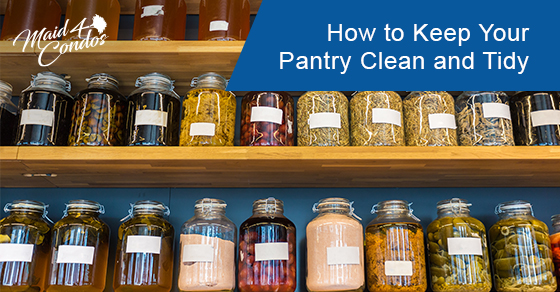
How to Keep Your Pantry Clean and Tidy

Have you ever opened your pantry to try and find something and it seems to have disappeared? Maybe you’ve noticed that you have ants or other crawly things in your food or on your shelves?

Perhaps your food sticks to the shelves, or seems to have leaked? All of these things are familiar problems of a disorganized, messy pantry. Here, we tell you how to keep your pantry clean and tidy, so you never have to worry about these issues again.

Tips to keep your pantry clean and tidy

1. Start with a clean base

As with any kitchen cleaning project, first, you need a clean base:

  • Clear the shelves off one by one and toss anything that is old.
  • As you clear out each shelf, brush away all the crumbs and wipe away gunk from leaky bottles.
  • Clean the shelves with an all-purpose cleaner to remove stuff like sticky sauce residue.
  • Place some shelf paper if you just like to make it easier to clean up if you experience spills. It also looks nice.

If your pantry has drawers, clear them out as well. Then, either take the drawers themselves out and shake out the crumbs or use your vacuum attachment to suck up all the debris.

You can also buy one of those little crumb brushes and dustpan sets to brush up all the crumbs in drawers and off shelves. Then, restock your shelves as you finish cleaning.

2. Consider using containers

While this might seem like a big investment, using containers with lids offers many benefits:

  • You keep food items fresher, especially foods like cereals, crackers, and cookies
  • You keep pests at bay because they can’t get into your food
  • You reduce crumbs because everything is safely contained
  • It’s easier to find everything

You can invest in containers at the dollar store, or simply buy containers for each shelf slowly but surely to spread the cost out over a few weeks or months. When choosing your containers, think square and stackable. Round containers waste space.

3. Create sections

To make it easier to put things away and find them, consider creating sections. Have one shelf or shelf area for baking items, another for cereals, another for pasta and rice, another for cans, etc.

You can sort things in a way that makes sense to you. Then, when you restock the shelves, make sure you put everything where it belongs.

This really is a time-saver, but also makes a world of difference in the way your pantry looks. You know the old saying, “A place for everything and everything in its place!”

4. Optimize space with organizers

If space is limited, shop around for things to keep everything organized. This helps make the most of your space. For example, if your spices are in pouches instead of jars, get some little trays or baskets and organize the pouches in alphabetical order.

If you have spice and herb jars, look for spice organizers instead. Also, search for organizers for the inside of the cupboard door such as hooks or shallow shelves with fronts. These work great for things like spices, but also smaller cans like tomato paste, or baking ingredients like extracts, food dyes, and sprinkles.

5. Use labels

Once you organize everything, consider using labels for each section. It will act as a reminder, but also make it easier for family members or guests to find stuff when raiding the pantry for snacks!

You can put labels not only on the containers but also on the shelves to keep items neat and organized.

6. Clean as you go

Make sure you don’t let things slide back into a mess. Wipe bottles after you use them to avoid stains and drips. Make sure containers are properly sealed with the lids on tight to avoid spills.

Avoid pantry snacking, and instead, take snacks out of the pantry and pour them into a bowl. This is actually a life hack because it also keeps you from eating an entire bag of chips!

7. Keep small items tidy

As mentioned above, having little baskets for foods like spice and herb pouches makes a world of difference. Anything small needs a little help to avoid getting lost amongst all those taller containers.

Small baskets are always an easy, affordable solution. Even if you don’t want to go to the trouble to alphabetize your spices you can at least keep those little items contained in one easier-to-find spot.

You can keep a basket per section, or just have a basket or two for anything small like the last few packs of yeast, chocolate bars, or even those square packs of ramen noodles.

8. Keep things kid-friendly

You might actually find this kid-unfriendly. Kids can get their hands into a jar or bag of cookies quicker than you think.

To avoid them snacking on the sly, put their snacks on the top shelves so they are harder to reach and harder to spot. If they are allowed to eat certain snacks, you can keep those foods on the bottom shelf.

Also, be mindful of items that can make them sick, like extracts, alcohol, raw flour, etc. Kids who can’t read might be attracted to brightly coloured packages.

Another consideration is pets. Your pets might lick or get into foods that can leave behind germs that make you ill. Keep your pantry door closed, so pets can’t get in and wreak havoc.

9. Commit to keeping items tidy

This is probably the hardest step. Once you get your pantry clean and tidy, you have to commit to keeping it that way. Reorganize, toss old food, remove crumbs, and wipe down shelves at least every season to keep debris and leaks to a minimum.

This also frees up space when you toss out stale boxes of cereal or those ghost pepper corn chips that were way out of your league spice-wise.

You can always call in the pros at Maid4Condos if this sounds like too much work! We’ll do a thorough kitchen cleaning, so everything is clean and tidy. Speak to our team today. You can also call us at 647-822-0601.

How to Clean Your Home’s Interior After Water Damage

Probably one of the greatest fears you have as a homeowner is experiencing significant water damage. In fact, even the presence of moisture puts your home at risk. Floods and leaks are devastatingly damaging because water can seep in everywhere. In some cases, the water can be polluted, which causes an unbearable stench and puts your family at risk of illness.

Cleaning the interiors of your house after water damage

As well, the more time the water has to set in, the more risk there is for mould and mildew growth. Yuck! That’s why water damage requires immediate attention. However, where do you begin? Here, we explain how to clean your home’s interior after water damage.

Check and Photograph All Your Belongings

First, your home insurance might cover damages, so be sure to take photos of all damaged items before doing anything. You have to assess the situation by checking your furnishings, walls, carpets, and belongings. The things you can easily either send for cleaning or throw out, such as bedding, clothes, couch pillows, etc., should be photographed or video recorded for insurance.

If the water was contaminated, such as from flood water, or from wastewater because of burst pipes, then it is pretty simple: you will have to throw the items away. However, you need to find a safe place to store the items so the insurance adjuster can also assess the damage.

Sort and Air Out Items

Once you get your bearings and have everything recorded, it’s time to physically start sorting everything. You’ll have to remove large items like sofas and mattresses to clean the floors properly, so move them into another room. If you have a backyard or balcony where you can leave clean but wet items out to dry, the fresh air and sun can do wonders to help speed up the process.

Remove Water-Logged Carpeting

Once all the large items are out of the room, if you have wall-to-wall carpeting that is soaked or even damp, it can damage the subfloors and baseboards. Damage must be managed quickly, so be sure to remove water-logged carpeting, or have the professionals come within 48 hours to avoid permanently damaging the subfloors. If carpeting is soiled by contaminated water, then it will have to be removed and tossed.

If the water was clean, professional carpet cleaners can remove excess moisture. For area rugs, hang them out to dry. If they are badly soiled, you can have a professional rug cleaner assess them to see if they are salvageable. When wet, carpeting can actually shrink as it dries, so it really is a good idea to have everything checked by professional cleaners.

Professionally Clean Upholstered Furnishing and Mattresses

All upholstered furniture and mattresses soiled by contaminated water will have to be thrown away. If the water is clean, you can have the carpet cleaning company take a look, and they can most likely use their professional upholstery vacuums to remove excess water. Things like toss pillows can be squeezed out and potentially sent to the dry cleaners. However, as mentioned above, if you can leave them in direct sunlight, the sun can do wonders to dry and refresh smaller items.

Wipe Down Other Furnishings

Other furnishings such as metal, plastic, and wood are easier to manage. Even if soiled, they can be wiped down with a good all-purpose cleaner and then dried thoroughly with a clean absorbent cloth. Don’t leave wood furniture in the sun, as this will actually increase risk for warping. Instead, sop up as much moisture as possible, and then leave it to dry out slowly away from direct sunlight.

Wipe Down the Walls

Walls can be tricky, as the water is most likely where you can’t see it. This can be dangerous, as this is the ideal scenario for mould growth. It is also risky for the structure of the wood supporting the walls and floors above. If you see water damage such as wet carpets or ceilings, but the walls seem fine, you probably have to open them up to look for damage. First, do a thorough cleaning to remove anything that appears dirty with a good bleach cleaner. To help save the walls, you can remove the baseboards and drill holes along the floor line to see if water comes out. This also helps ventilate the moisture.

If there was flooding, once the water is drained, you’ll have to remove the drywall at least up to the waterline. If there is insulation in the wall, it will have to be replaced. Spray everything with a good bleach spray cleanser to disinfect and also kill any mould spores that might already have started growing.

If there was major flooding, you probably are better off speaking to a professional restoration company. They have industrial strength fans and dehumidifiers to speed up the drying process and avoid mould growth. Walls should be left open for about a month to allow everything to air out and dry properly.

Air Out the Floors

As mentioned, those subfloors beneath damp carpets or laminate are prime real estate for mould to move in. As well, whether it is hardwood or plywood, anything made of wood will swell from moisture. If they don’t have air circulation to dry them out properly, the damage will be costly not just for mould, but also because the wood will have to be replaced. Removing the carpeting allows the subfloors to dry. A professional dehumidifier is the best way to help the process along.

Otherwise, it actually takes months for the floors to dry out completely. Wood floors are the most vulnerable, as they can buckle and warp when the water is absorbed and the wood begins to swell. Again, a professional is your best bet in severe cases where the floors can be completely damaged from the moisture. The good news is that if the subfloor is concrete, you might not have to take such drastic actions.

Appliances and Electronics

Do not turn on appliances or electronics that were damaged by water. You can seriously injure yourself by electrocution.

Ongoing Mould Prevention

Unfortunately, once your belongings are exposed to large amounts of water, the dampness means they are vulnerable to mould growth. You’re going to have to keep an eye on everything to look for signs of mould.

Your nose will be a big help: if you smell a damp or musty smell, mould is growing somewhere. If you can, invest in a dehumidifier to help keep the air dry. In the winter, you can keep the heat on, and running the air conditioner in the summer also helps manage humidity levels.

Fans and open windows keep the air circulating in your home. Keep all the doors open in rooms that were affected to aid the drying process. This also helps if damage was in a closed-off area from sun and windows, such as hallways.

Cleaning Up Mildew

Mildew is another troublesome result of water damage. You might think you dried everything well, only to find mildew growth. If you do spot mildew, you might want to throw the items out. However, if you catch it early enough, you can wipe the mildew off with clean sudsy water and then dry the items thoroughly.

If you are trying to get your home back to normal after water damage, calling in residential cleaning services is the safest way to avoid mould, mildew and other problems that may arise. At Maid4Condos, we are ready to assist in the cleaning process and help get your home back to its comfy self. You can call us at 647-822-0601 or contact us online.