How to Make Your Bathroom Grout White Again

If you find yourself staring at discoloured grout when trying to soak in a relaxing hot tub, or taking your morning shower, it can make you feel a little icky. Grout will naturally discolour and gray over time. That’s even if you tend to be someone who often cleans their bathroom. When grout is discoloured, it doesn’t mean you need new tiles. Instead, you can use these cleaning tips to help make your bathroom grout white again.

How to restore the whiteness of bathroom grout?

Warm Water and a Brush

A spray bottle of warm water and a stiff, bristled cleaning brush will often be enough to rid your white grout of its dinge. You can find the brushes at grocery and hardware stores. You’ll get a better assortment at hardware stores, however, as they carry brushes designed for grout cleaning. Just spritz the grout with water and then scrub it with the brush in a circular motion. You can even use an old toothbrush.

Vinegar

If warm water alone doesn’t seem to be working, pour out half the water and replace it with white vinegar. Then spray the grout and then let it sit for about five minutes before scrubbing.

Baking Soda

If you still don’t see results, put aside the spray bottle and fill a small bowl with baking soda made into a paste with a bit of warm water. This provides more abrasive power to your efforts which can help break down the dirt. Apply the paste with a brush and then spray it with a light spritz of your water/vinegar solution. It will start to foam, and you can then scrub it and rinse with clean water.

Hydrogen Peroxide

You should see results from the baking soda and vinegar method but you might want the grout even whiter. You can use hydrogen peroxide and a scrub brush to get whiter results. If you prefer, add the hydrogen peroxide to baking soda to form a paste. Be sure to rinse the paste away when you are done scrubbing.

Oxygen Bleach

If you want to try something without the need to scrub, you can use a laundry oxygen bleach powder. You’ll need the room to be well ventilated for this and it can be applied and left on for 10 to 15 minutes so it can do its job. Try it on a small area first to see if you get the results you want. Once you rinse it off, and if it looks good, proceed with the rest of the grout.

Commercial Grout Cleaners

Actual commercial grout cleaners are available on the market that can be sprayed and wiped or sprayed and scrubbed. The non-scrubbing sounds easier but they don’t always work as well as you’d hope. Again, you can give it a try to see if you get the results you want.

The problem with these products is, you need good ventilation due to the harsh chemicals. You’ll usually see good results with the spray and scrub cleaners but they do require more elbow grease. Just be sure you read the instructions completely before you begin.

Chlorine Bleach

Chlorine bleach comes in handy spray bottles and can be used on tough cases. However, you need to apply them lightly and again, you will need the room to be well ventilated. This can be used to remove deep-down dirt stains, followed by a scrub-free spray once a week, so you don’t need to take the extreme route again. Otherwise, you’ll eat away at the grout and even remove the finish on the tiles as bleach is so corrosive.

Steam Cleaners

This is the tool of the pros. It’s environmentally friendly and uses heat to get rid of grout dirt and grime. However, you need to purchase or rent the steam cleaner which can be expensive. You can also call in a professional grout cleaner to do the job. We always get the best results.

Caution!

If you use any commercial products including bleach products, never apply them together. Be sure you thoroughly rinse and wipe down the grout to remove all traces of the cleaning solution before trying something else. If not, you are at serious risk of creating a chemical reaction that can be very harmful to your lungs, eyes and skin. This includes mixing cleaners with hydrogen peroxide and vinegar.

Be Proactive

To avoid gray grout, use a vinegar wipe down once a week to reduce mould and mildew build-up while also rinsing away soap scum. Another rule is to use a shower squeegee after each shower. This just takes a few seconds and removes most of the water and soapy residue right away. You’ll find both methods really reduce the need for scrubbing and your clean shower will be a lot more pleasant.

To learn more about cleaning your bathroom call Maid4Condos at 647-822-0601 or contact us here. As a premier residential cleaning service in Toronto, we have the knowledge and experience to help you make your home spotless, including how to make your grout white again.
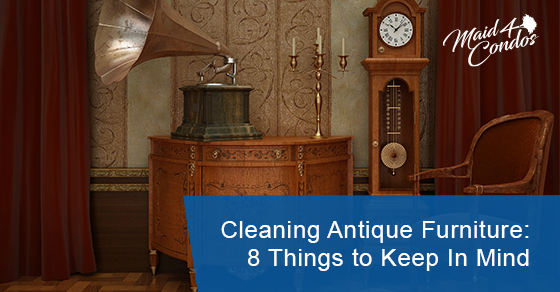
Cleaning Antique Furniture: 8 Things to Keep In Mind

Whether you collect antiques or are the proud owner of some family heirlooms, antique furniture requires special care. You want it to maintain its lustre, as well as its value. Therefore you should be aware of proper cleaning to avoid causing damage to the delicate finish.

Things to remember when cleaning antique furniture

Using the wrong cleaning products can actually lift off the finish. In fact, the natural build-up that occurs on antique furniture adds to their appearance. Here we offer eight things you should keep in mind when cleaning your antique furniture to avoid common cleaning mistakes.

1. Only clean as needed

This should make you happy if you hate cleaning. Some people over-clean their sofas, upholstery and antique furniture which can cause damage and ruin their look. Instead, light dusting is all it takes to keep it looking its best. Using excessive cleaning products or trying to wax the furniture too much will make it harder to clean over time. Unless your antique furniture has noticeable grime on it, then a light dusting is fine.

2. Understanding wear and patina

Next, it’s important to understand natural wear on antique pieces. You’ll tend to see discolourations on the furniture where it has been handled or used most often. For example, wooden chairs might have darker areas across the top of the chair where people would frequently grab the chair to pull it out from the table. These natural discolourations are actually considered quite valuable and can add to the charm and character of the chair. They are created either by wearing away the finish or by oils found in your hand. Therefore never try scrubbing away darkened areas or retaining lighter areas as this will damage the furniture and ruin its time-worn ‘patina.’

3. Avoid wax

We often think that antique wood furniture needs waxing to protect it. However, the natural patina that forms over time actually helps strengthen the original finish and protects the wood. When you wax you can actually cause damage and dull the finish. Some mid-century pieces made of teak can benefit from waxing, but you really shouldn’t use anything unless specifically instructed to do so by an antique expert.

4. Avoid reapplying finishes

As mentioned above, you really shouldn’t try to clean antiques by taking off the finish and replacing it. This again, will ruin the patina and destroy the value. Therefore always steer clear of oil products containing varathane and urethane as you will be sealing in grime while also potentially creating a chemical reaction that cracks the original finish.

5. Restoration vs cleaning

If you want to have your antique furniture professionally cleaned, make sure you are very clear in what you ask for. Cleaning will keep the integrity of the patina in place while restoration involves stripping away the old finish and replacing it with a new finish. This is really not desirable as it will completely change the appearance of the piece.

6. Wet vs dry

If you need to try to remove what you believe is grime, you can try doing this with mild soap and water. Avoid harsh cleaners, waxes and oils as you never know what kind of reaction this might create. Always make sure you thoroughly dry the furniture or else the damp can cause issues from warping to water stains. This is one of the reasons the dry option to simply dust works best on furniture that is not dirty.

7. Test cleaners

If you are trying a new type of furniture cleaner on any surface in your home, do a small test first. Choose a small, less obvious area so that if it does cause discolouration or remove the finish, it will only be in one tiny area instead of the entire piece of furniture. A good idea is to test natural cleaners instead of synthetic ones.

8. Finished vs unfinished wood

It can often be difficult to tell if wood is finished or unfinished. An easy way to confirm your wood is unfinished is to run a wet sponge over it. It should darken in colour if unfinished, as there is nothing preventing the water from penetrating the wood. However, sometimes oils from hands can add a bit of protection which could prevent the water from absorbing. If you are sure the wood is unfinished you can use a wood oil treatment once a year to help protect the wood. This is the only furniture that really requires such a treatment to help preserve it. When in doubt, stick with the dry dusting method.

To learn more about cleaning antique furniture, or to explore basic cleaning services for your home, call Maid4Condos at 647-822-0601 or contact us here.

A Simple Guide to Cleaning Your BBQ at the End of the Summer

Even if you are a grilling die hard who continues to BBQ in below freezing temperatures, as the summer winds down, your grill is most likely in need of a good cleaning. Of course, a real BBQ hero takes care of their grill, but for the rest of us schleppers, the whole scrubbing it clean after every use becomes too tedious to do all summer long.

How to clean your BBQ at the end of the summer?

Fall is the perfect time of year to show your BBQ some extra attention and give it a deep clean. Here we offer our Toronto cleaning pro tips on how to clean your BBQ inside and out.

Disconnect the Tank

If you have a propane tank with your BBQ it should be removed for the winter. Be sure all of the dials are completely turned off so you can safely remove the tank. A good tip is to check your propane tank to see if it is almost empty.

Run your hand along the tank from top to bottom to see where it starts to feel cold. The cold areas indicate the level of the propane. If it is empty, get it filled now so it’s ready to go when the first warm weather arrives and you want to grill some steaks or burgers. Not only will you be all set, but you’ll also avoid line-ups at the propane tank place. Also, remember never to bring your propane tank indoors as it is a fire hazard.

Tackle the Grates

Grates are a real pain to keep clean but it’s a necessary evil. Wear work gloves and remove the grills and grates, as well as any other moveable parts. Get a bucket and fill it with warm water and a good grease-cutting dish detergent. Any parts that will fit in the bucket can soak for about 10 minutes to loosen up the grunge. You can then clean the parts with a dish scrub brush or brillo pad to remove the mess.

Use your garden hose to rinse away the soap and debris. Then make sure you dry them completely to avoid rusting. Place them back on the BBQ. A good tip is to use a crumpled ball of aluminum foil as a scrubber. It allows you to get in between the grates and have more control over where you scrub.

Scrub the Interior

The lid and walls of your BBQ’s interior tend to get spattered with grease and debris so will need a good scrubbing. Before you begin though, be sure to lay down some aluminum foil to protect the heating elements. Use a metal-bristle grill brush to scrub away the gunk and don’t forget the inside of the lid.

The Big Wipe

Wipe all the interior surfaces down with some warm, soapy dishwater and a clean cloth. Give it a good dry with a clean microfibre cloth. Don’t forget to remove the foil and fold it carefully to make sure all of the debris stays inside. Stand back and admire your work!

Clean the Exterior

Use clean, warm soapy water to tackle the outside of the BBQ. It can get greasy but also get dirty if you tend to forget to put the cover on after use. Watch for spots like dripped barbecue sauce as this can attract pests.

Clear Out Cabinets

You might have a little collection of your secret herbs and spices stored in the cabinet of your BBQ. Be sure to check the cabinets for any food items and bring them inside to avoid attracting pests.

Why clean your BBQ?

If this sounds like way too much work, consider this: if you leave all that greasy food residue on your grill, it can help contain moisture. Moisture loves metal and will eat away at your BBQ, leading to rust and damage.

A good cleaning reduces the risk of corrosion, so you get more years of use from your grill. Also, food debris can attract pests looking for a place to stay for the winter. You don’t want to create a squirrel or mouse hotel. Last but not least, it’s just common sense to keep the grill where you cook food clean to avoid foodborne illnesses.

To learn more about cleaning your BBQ or inside your home, call Maid4Condo at 647-822-0601 or contact us here.

How to Remove Candle Wax From Any Surface

If you are crazy about candles, you know what a pain it can be to remove candle wax from all kinds of surfaces. Candle drips and mishaps can ruin all those chill zen vibes you’re feeling thanks to the lavender, jasmine, clary, sage, or Seabreeze candle you’ve been burning.

How to get rid of candle wax from any surface?

But there’s no need to let wax drips get you down! Here we offer our professional home cleaning service tips to remove candle wax from any surface.

Wood

This is probably the most stressful drip as one wrong move and you could ruin your wood surface whether it is your brand new hardwood floors, or that great vintage table from a local garage sale. But fear not, you can make short work of the mess by placing a bag filled with ice on the wax.

The cold will harden the wax so it’s easier to remove. It just needs to sit on there for about two minutes, any longer and you can end up with a water stain. Gently remove the wax with a butter or putty knife, or even an old credit or gift card, and then wipe it clean with a microfibre cloth.

Wax in grooves or carving will need to be heated up. A hairdryer works perfectly. You can then dab it away with a cloth. This usually requires a few tries.

Glass

Glass tables and shelves or even glass candle holders look pretty awful with globs of wax on them. This is very tricky because you’ll need heat to melt the wax. But some glass can break when heated so if you don’t know if the glass is tempered don’t try this. Plus, if you do use your hairdryer as above, only set it to medium. You can also scrape up the remaining wax with a credit card as it shouldn’t scratch the glass.

Stone/Marble Countertops

This is a job for ice. You can leave it on longer than wood because there isn’t a risk for watermarks, allowing you to get the wax nice and hard. You can then use a butter knife, credit card, putty knife etc. to scrape it up. It should pop right off.

Vinyl Floors

Drips on vinyl floors come off by applying a cloth dipped in hot water to help loosen and melt the wax. You can then use a dry cloth to wipe away the melted wax. You might have to do this a few times if the wax is thick.

Carpet

This is probably the biggest pain. Once that wax gets into the carpet it can be hard to remove. However, you can start by scraping the wax with a butter knife to get as much off as possible. You can then lay a clean damp cloth over the remaining wax and gently apply low heat to the cloth with an iron. With luck when you lift the cloth, you’ll remove a good amount of the wax.

Last, use a cloth dipped in rubbing alcohol to try to remove the rest. If this doesn’t work, try the ice cube technique to freeze the wax so it gets hard, and you can try to remove the hardened clump with a butter knife or spatula. Run the vacuum over the area to suck up any of the smaller hard pieces.

Walls

If you have candle sconces the melting wax tends to drip down the wall. You can remove the wax the same way you did for the carpets. Use a damp cloth and an iron set to low to soften the wax. Then carefully lift the cloth to remove the wax. Repeat as required. If there is any residue, use warm soapy water and a cloth to remove it.

Tablecloths and Linens

A long candlelight dinner party can burn your candles down, leading to spills. Put the tablecloth or napkin into the freezer overnight to let it freeze up. In the morning, peel it off with a butter knife. If the candle was dyed, it could leave a stain. You can use the iron method to melt the stain and lift it off. In this case, a paper bag often works best as opposed to a cloth. If it doesn’t come out, soak the area in boiling water and then apply a stain remover.

If it’s machine washable, follow the instructions on the label and hopefully it will come out in the wash. Silk table linens are a little trickier. After the freezing step, be very gentle trying to lift the hardened wax off. A spoon might be better as it is less likely to pull at the threads.

You’ll need to invest in some WD-40 which you can get at hardware stores. Give the stain a spray of WD-40 and then add a few drops of dish detergent. Massage it into the stain and then wash the tablecloth following the washing instructions on the label. DO NOT put it in the dryer. Hang it to dry. If the stain is still there, use a stain remover and toss it in the wash. Just be sure to test the stain remover first in case it makes the dye run.

Leather

Lay down a paper towel on the stain and then apply a Ziploc bag filled with ice to the area. Leave it there for about three minutes to allow the wax to harden and then very gently try to lift the wax off with a plastic spoon. You need to be very careful when cleaning leather, as it is very soft, and you don’t want to scrape the surface. Instead, use more of a lifting motion getting the spoon under one of the edges. This is tricky and you could actually ruin the leather grain so be as careful as you can.

Next, you’ll need to apply heat with a hairdryer set to warm to soften the remaining wax. Remove the wax in layers as it melts. If there is any residue left behind, apply a leather cleaner using a microfibre cloth and massage it into the stain. Once it dries, apply a leather conditioner and it will help even out any discolouration caused by the wax.

To learn more about removing candle wax or stains around your home, call Maid4Condo at 647-822-0601 or contact us here.

14 Areas of Your Home You’re Not Cleaning Enough

You might think you are killing it as an ace home cleaner. You wipe down your counters several times a day, scrub that toilet, wash the floors and wash your sheets every week. Your home is sparkling. However, our condo cleaning service experts are here to tell you, chances are you missed a spot somewhere along the line. Here we look at 14 areas of your home you’re not cleaning well enough, and how you can tackle them.

Areas of your home that aren't thoroughly cleaned

1. Cutting board

We’re hoping you at least wash your cutting board every time you use it for meat, but a lot of people don’t bother washing their cutting boards for things like fruit or vegetables. After, every time you use it, you should be washing your cutting board to disinfect it.

Plastic boards can be run through the dishwasher or washed with soap and water, followed by a good rinse to get rid of soap residue. Wood boards are higher maintenance and need to be washed with either a mix of 75% vinegar with water or a paste of water and kosher salt. Rinse well for both.

2. Rice cooker

We’re not sure of the thought process for this one. Maybe people think they only use it for rice, so why bother washing it. But seriously, yuck. Anything used for food preparation or cooking needs to be washed after every use. Clean the lid and thoroughly wipe the pot so it’s ready for use next time. Otherwise you’re leaving an open invitation for bacteria to move in and grow.

3. Microwave

This is another big yuck. Every time you use your microwave and ignore those spatters you are creating a horror show of bacteria. Look, we know spatter doesn’t happen every time you use a microwave, but if it does, wipe it down immediately. Otherwise, you should clean it once a week.

An easy tip is to put a bowl of water in the microwave and run it for five minutes and let the steam loosen any dry food particles. Then wipe it all down with a clean cloth.

4. Humidifier

It’s easy to ignore your humidifier, but mineral deposits can build up inside, these deposits reduce its efficiency, causing it to break down sooner than it should. If you have a cool-mist humidifier you should clean the reservoir every third day or so with water.

When cleaning your humidifier, avoid using soap or disinfectants if you see mineral deposits and use vinegar instead. The wick needs to be cleaned with cold water and dried completely before you turn it back on. Remember to replace the wick every six months.

5. Sofa

Your sofa sees a lot of wear and tear, and if you tend to binge eat as you binge watch, it needs a good vacuum between and under the cushions every two weeks. Of course, if you drop something on it you need to spot clean it right away. It doesn’t hurt to give it a professional clean every year.

6. Dishwasher

You might think your dishwasher stays clean since it is running all the time with water and soap, but you should be cleaning the gasket with warm, soapy water every six months. Use a dishwasher cleaner in the dishwasher to eliminate any mineral deposits twice a year as well.

7. Toilet brush

What? Clean a cleaning brush?

Well, we don’t have to explain why this is a must, even though pretty much no one does it. You can spray it down with a disinfectant spray, especially the handle, every now and then to reduce germs. Otherwise, you’re just swirling the same, ahem, ‘dirt’ around every time you “clean” your toilet.

8. Coffee maker

Your coffee will taste a lot better if you clean your coffee maker once a month. Otherwise what might seem like a simple black cup of coffee comes with a pile of bacteria.

The easiest and most effective way to clean your coffee maker is to use a mix of 1:1 vinegar and water to wipe everything down. Rinse everything thoroughly to avoid salt and vinegar coffee, great for chips not so good for your morning cup. Also, give your manual a read to see if it recommends descaling and follow those instructions if it does.

9. Dish rack

Dish racks get a grungy build-up of the residue left behind from dish detergent. You can wash it with the same trusty 1:1 mixture of vinegar and water and give it a scrub if needed once a month.

10. Mattress and pillow covers

You should wash these at least a few times a year in hot water to kill dust mites. Just be sure to follow the manufacturer’s instructions before popping them in the wash.

11. Air purifier

The main concern with air purifiers is the filters. Because there are different kinds of purifiers and filters, make sure you read the instructions, so you know how to wash them and/or when to replace them.

12. Vacuum

Some vacuums have a washable filter that needs to be cleaned every month or so. Follow the manual instructions to make sure you understand how to take it out, and be sure it is completely dry before you put it back in place.

13. Pillows and comforters

To properly clean your pillows and comforters, read the instructions listed on their tags and follow the cleaning steps once a year or so. This will help remove dust mites, as well as things like drool and sweat that can accumulate on them over time.

14. Washing machine

The problem with washing machines is that they can get rusting or mildewy when not allowed to dry properly. Always leave the lid/door open when your load is done to let the moisture evaporate after each use. Front-loaders are worse because of the rubber seal around the door. Wipe it down after each use if you remember. Also, they make specialty cleaning products you can run in the wash cycle once a month to reduce the risk for mould or mildew growth.

To learn more about cleaning your home thoroughly, call Maid4Condo on 647-822-0601 or contact us here.

5 Tips for Thoroughly Cleaning Your Oven

It can be easy to forget to clean your oven. Then one day you turn it on, and bam, smoke or stink city. Cleaning your oven is a dirty task, especially if you don’t have a self-cleaning feature. However, with regular cleanings, the job becomes easier. Here we offer five tips for thoroughly cleaning your oven.

How to clean your oven thoroughly?

1. Baking soda

Baking soda is a naturally abrasive cleanser that is safe to use on a long list of surfaces. Because oven cleaning products are so strong and toxic, you might try using baking soda first. This way you can get a good cleaning but avoid breathing in those strong chemicals.

Baking soda can also make short work of the greasy, grimy build-up common to ovens. To tackle cooked-on grime, make a paste of baking soda and water or lemon juice. Remove the racks from your oven and lay down newspapers below the oven to catch any gross glop that drips out as you clean.

Put on some gloves and then spread the paste all over the inner walls and bottom of the oven, being sure to avoid the electric heating elements and flame openings for gas ovens. Let it sit overnight and then put your gloves on and use a damp cloth to scrub away the paste. Use a clean cloth to rinse the oven clean.

Meanwhile, soak your racks in warm soapy water so you can tackle them next. Use your paste mixture to scrub away sticky grease with an abrasive sponge and then rinse the racks down. Place your racks back in the oven and you’re done.

2. Lemons

Lemons are another natural miracle worker as a refreshing cleaning alternative. Squeeze out the juice of two lemons into an oven-proof dish filled with water. Preheat your oven to 250 degrees and then place the dish in the oven to cook for an hour. Turn the oven off then open the door to let it cool down. You want it to be warm to the touch, but not so hot you can burn yourself. Remove the dish and set it aside. Take out the racks and then with a damp cloth, scrub the inside of the oven. After that, tackle the oven racks using your warmed lemon water and an abrasive sponge. Let the racks dry and then place them back in your lemony fresh oven.

3. Oven cleaner

If you are okay with using traditional, chemical oven cleaners, it’s probably the best solution. It’s made specifically for all that baked-on grime that can be very difficult to remove. Follow the instructions of the package, but add these additional tips. Remove the oven racks and lay down newspapers around the oven before you start spraying. This will keep your floors clean. This is seriously stinky, dangerous work so gloves, a mask and goggles are called for.

Use the spray on your oven racks and then seal them up in a garbage bag while the oven is prepping. Wipe down the interior of the oven with a clean damp cloth, removing all of the cleaner residues. Take the racks out of the bag and scrub them with an abrasive sponge, then rinse them down thoroughly before placing them in the oven. You really want to get any residue of the cleaner rinsed as it stinks when you turn the oven on for the first time.

4. Clean the glass door

Nothing is grosser than looking at your lovely cake or pie baking in the oven through a filthy, grimy glass oven door. You can use oven cleaner to target this mess by opening the door flat and giving it a good spraying. Don’t forget to lay down those newspapers to catch any runoff. However, before spraying, try to scrape off any debris you can first.

Leave the cleaner to do its work according to the instructions then use an abrasive sponge to get at that grimy mess. Because the window has crevices, you’ll need to use an old toothbrush to get into the border. Wipe everything clean and then dry it with a clean cloth.

5. Precautions using oven cleaners

As mentioned, oven cleaners are highly toxic. When using these products use the following precautions to avoid issues:

  • Keep kids and pets out of the room when using the cleaner. It is toxic and very irritating to the skin. If inhaled it can be very dangerous.
  • As mentioned, always wear gloves, a mask and goggles to protect yourself from the caustic chemicals.
  • Work with doors and windows open so you have as much air circulation as possible. Run your kitchen fan as well.
  • Avoid contact with other surfaces in your kitchen as the chemicals in the cleaner can be very destructive especially to paint, non-metallic kitchenware, counters and wood.

These tips will protect you and your family from harm when using the cleaner. Cleaning your oven is never fun. If you find your technique doesn’t work, it’s time to call in the big guns.

If you would like to find out more about keeping your oven and home clean, call Maid4Condos today at (647) 822-0601 or contact us here.

How to Clean a Humidifier

Humidifiers help combat cold dry air and keep your home comfortable. They also reduce symptoms caused by dry environments from scratchy throats to dry skin. However, although they do make your home more comfortable, they also require special care to keep them working properly.

Tips to clean a humidifier

Dirty humidifiers can actually make things worse in your home by dispersing bacteria, mould and mildew into the air you breathe. This can lead to worsening allergy and asthma symptoms. So knowing how to clean your humidifier is important.

Here we offer tips on how to clean your humidifier, so you reap the benefits and keep your air quality clean and comfortable even in the dead of winter.

How to Clean a Warm Mist Humidifier

If you aren’t sure what kind of humidifier you have, warm mist humidifiers produce a warm mist that can be seen and felt. If you have a warm mist humidifier, they are also quite quiet and are an excellent choice to help reduce germs. They do tend to use up more energy, and the steam can cause scalds if you aren’t careful. They are probably not the best choice if you have kids or pets unless you find a safe spot that is out of the way. To clean your warm mist humidifier follow these steps:

  • Always check the manufacturer’s recommendations before you begin cleaning your humidifier.
  • Unplug your humidifier and remove the filters and other removable parts.
  • Place the removable parts in your kitchen sink with some warm water and dish soap and carefully clean, rinse, and leave them to dry.
  • Clean your filter using clean water without any soap and leave it to air dry.
  • Wipe down the humidifier using a microfibre cloth dipped in warm soapy water and rinse it thoroughly with a clean wet cloth.
  • For your tank, use vinegar and a toothbrush to tackle the buildup of mineral deposits, mildew, and mould. Then wash it out with soap and water in your kitchen sink. Rinse thoroughly and allow it to air dry.

Once all the parts are completely dry you can reassemble it, plug it in and switch it on.

How to Clean Cool Mist Humidifiers

Cool mist humidifiers emit an invisible cool mist into the air. They are good at trapping airborne contaminants and are used in warm environments. They tend to be noisier than their warm mist counterparts, and need to be cleaned every few days as they are at higher risk for bacteria growth. To clean your cool mist humidifier follow these steps:

  • Unplug your humidifier and remove the filter and removable parts.
  • Follow the same cleaning instructions for the removable parts above, except for the filter.
  • Because the filter traps airborne contaminants, it requires a more thorough cleaning than a hot mist humidifier. Submerge it in undiluted distilled white vinegar for 30 minutes. Rinse it thoroughly to remove the vinegar otherwise, it will produce a smell when you turn the humidifier back on.
  • If the filter seems to have buildup, scrub it with a soft-bristle toothbrush before rinsing.
  • Pour vinegar into the base of your cool mist humidifier and let it soak for 30 minutes and then rinse it carefully to remove all of the vinegar.
  • For the water tank, you can use a brush and vinegar to remove residue and mineral deposits.
  • Wipe down the outside of the humidifier following the same steps above for the hot mist humidifier.

Once everything is dry, put the humidifier back together, plug it in and switch it on. If you smell vinegar, you can turn it off, unplug it and take the filter out to rinse it again. To be safe, rinse the water tank as well. Be sure the parts are completely dry before putting it back together and switching it on.

How to Disinfect a Humidifier

Before storing your humidifier away for the summer, be sure to clean and disinfect it. Disinfecting is a different process and will help kill bacteria, mould and viruses. Although regular cleanings will help reduce this buildup, it is always recommended you disinfect your humidifier using one of the following processes to help improve indoor air quality.

  • Hydrogen Peroxide: Hydrogen peroxide helps prevent mould. Use a solution of four parts water to one part 3% hydrogen peroxide directly in the tank and let it sit for 30 minutes. Empty it out and rinse the tank. Let it air dry before putting it back together.
  • Tea Tree Oil: Tea tree oil is a natural disinfectant, antiviral, and antibacterial solution. It’s ideal for cool mist humidifiers. Use five drops of the essential oil in the tank for 30 minutes before rinsing it and letting it air dry. If you have a warm mist humidifier, you can actually add five drops to the water tank and let it run. It sanitizes while also helping clear your breathing.

How to Keep Your Humidifier Cleaner

You can also use these tips to help keep your humidifier cleaner:

  • Change the water: Every day you should dump out the old water and refill the tank with fresh water to prevent mould and bacteria growth.
  • Use distilled water: Instead of tap water, use distilled water. It won’t cause mineral build-up and will also reduce the development of white dust caused by minerals. This helps improve your indoor air quality.
  • Clean regularly: You should clean your humidifier once a week and disinfect it as well if you run your humidifier all the time. Thorough cleanings help remove mould and bacteria, so you maintain better air quality.

As you can see, although your humidifier offers many benefits, if not cleaned often, you could be reducing air quality in your home.

If you would like to learn more about keeping your entire home clean, call Maid4Condos today at (647) 822-0601 or contact us here.

How to Clean Your Jewellery at Home

Your jewellery is a major investment. You probably make an effort to keep it safe and secure, but what about keeping it clean? Jewellery can be made of precious metals and gems, as well as other materials each with its own cleaning requirements. In order to keep your jewellery clean, you’ll need some tips and tricks to avoid causing permanent damage. Here, we look at how to clean your jewellery at home.

Tips and Tricks to  Clean Your Jewellery at Home

Sort Your Jewellery

Most people have a larger share of costume jewellery than they do of the real thing. Sort your jewellery into the stuff you know is worth something and the items that are fake. If you aren’t sure, anything gold in colour that appears tarnished is fake, as gold doesn’t tarnish at all. Then, sort your gold, diamonds and silver. Once sorted, you can safely get started on cleaning.

Cleaning Diamonds

Dirty diamonds can lose their sparkle, as things like lotions, skin oils, and cleaning products build up. You can wash your diamonds using a very mild dishwashing detergent with warm water. Set your diamonds in the warm liquid for about 5 minutes and then gently clean them with a soft-bristle brush. Rinse with clean warm water and pat them dry. Rings on settings can be the worst for grimy buildup, which is why the brush is needed. Get into the crevices to remove all that grime so you can wear your diamonds with pride.

Cleaning Pearls

Pearls can be wiped clean with a cotton cloth that is slightly dampened in water and a bit of mild dishwashing liquid. Rub the pearls individually as best you can and never soak them. Wiping is the only way to get pearls clean safely. Then, leave them to air dry.

Polishing Silver

Silver is infamous for getting tarnished, but you can bring it back to its original tone using a polish made specifically for silver jewellery. You should be able to find silver jewellery polish at your local jewellery store. It just takes a few drops of the polish on a soft cloth to rub away the tarnish and watch it disappear. Follow the directions on the product you choose, as they can vary in use.

If you don’t want to buy special polish, you can also use mild dishwashing soap and warm water. Both ways require a wipe with a clean, dry soft cloth as the final step. If you find your jewellery is quite dark from tarnish, you might need a more aggressive approach to help remove the dinge. An excellent home solution is to mix three parts baking soda to one part water to create a more abrasive cleaner that can be used with a lint-free cloth for scrubbing. You can then rinse the pieces off with water and buff them dry with a soft, clean cloth.

Polishing Gold

As mentioned, gold doesn’t actually tarnish at all. However, it can appear dull as things like lotion and soap build up, especially on rings. It can be washed the same way you wash your diamonds.

Cleaning Costume Jewellery

For your fake metal jewellery, you have to be more careful, as it can be easier to damage than sturdy real gems and metals. You’ll want to use a very mild, natural hand soap and a gentle bristle brush to remove tarnish and bring back the shine.

Costume jewellery with rhinestones is even trickier due to adhesives used, so be extra careful and never use anything too acidic even if it is something natural like vinegar or lemon juice. Everything should be rinsed with clean water. You also have to thoroughly dry fake metals because they might rust! So, pat everything dry to make sure there is no water left behind.

How to Care for Your Jewellery

You can keep your jewellery looking its best by caring for it when you wear it. Always take your rings off when you wash your hands, or apply lotion. You should also take them off when using cleaning products around the house. Keep them safe in a dish or jewellery box when not in use so you don’t lose them. Silver should be stored in an anti-tarnish bag. It’s also a good rule of thumb to remove jewellery before swimming. Not only can it slide off in the pool, but it can also be damaged by the chlorine. For expensive, authentic items, have them checked at a reputable jeweler to make sure the settings remain secure. This will reduce risk for the stones coming loose and getting lost.

For more information on how to keep your jewellery clean, speak to the residential cleaning experts at Maid4Condos and learn more about our Toronto cleaning services.

Where to Start Cleaning Your Home When You Feel Overwhelmed

Oh, boy. We know how you feel when you’re staring down an all-encompassing mess that seems to cover every single corner of your condo! Whether it’s your home that feels too messy or you’re overwhelmed by life in general, tackling a cluttered home can be difficult. The thing is, though, the messier your home gets, the more overwhelmed you’ll feel.

Where should you begin cleaning if your home is messy?

So, your best bet is to get started now. Here’s where to start cleaning your home when you feel overwhelmed.

Start by Picking Things Up

Every journey is tackled one step at a time, no matter how short or long. So, your first step in your cleaning journey is to start by picking things up. Choose a spot of the room and pick up each item out of place, and put it away. Use a logical process such as putting dirty clothes in the laundry and hanging up anything that can be worn again. Have a garbage bag handy so you can dispose of anything that can be thrown away as you work.

For anything that needs a home, choose a place such as a table to put it on, and then organize those items later. Your goal right now is to tidy the mess by either putting things away, tossing them in the laundry, or throwing them out.

Get Organized

Once you tackle tidying, go to the place where you piled the things without a home. Look at the items and see if they can be sorted into logical piles, and then choose a place in your home to store them. By keeping things sorted logically, you’ll be able to find them easily. Consider investing in some baskets for smaller items that you can place on shelves or in cupboards. Also, for things you use less often, find large, flat Tupperware containers that can slide under the bed for easy storage that are out of sight and don’t take up much space.

Give Yourself Time

As you work, don’t get overwhelmed by the idea that this entire big mess needs to be finished now. Instead, do one thing at a time. If you must stop because something else needs doing, just be sure to start again as soon as you can. This way, every time you return to the job, it will have gotten less daunting, as you’ll be chipping away at it until it’s done. In fact, you can even set a certain amount of time dedicated to cleaning each day whether it’s in small increments of just 15 minutes, or longer times like an hour. If you keep it up, your home will be clean in no time.

Stop Adding to the Mess

This is very important. Remember, you’re trying to clean your mess, so you need to stop adding to it. Every time you don’t put something away, you’re making your job harder. A good rule of thumb is to have a plan. Have a place for everything, so it is easier to keep the home clean. Basic spots would include:

  • Clean clothes in the closet or a drawer.
  • Dirty clothes in the laundry hamper.
  • Reading items like magazines in a magazine stand.
  • Uneaten food in the kitchen cupboards that is sealed to avoid pests and keep food fresh.
  • Garbage, well, in the garbage.

Use a system that works for you, focusing on reducing mess and keeping things tidy. When you use something, put it back where you found it—every time.

Make Cleaning Fun

Yep, this is a challenge, but it can be done. Some ideas to help you enjoy cleaning include:

  • Blare your favourite music.
  • Binge watch your favourite shows if cleaning near a TV or computer.
  • Listen to podcasts or a book.
  • Ask someone you like to give you a hand so you can chat, or call someone hands-free and chat while you work.

All of these things will help the time fly by.

Be Methodical

Don’t try cleaning sporadically without some kind of method in place. Always start in one area and don’t move on until it’s done. For example, if your coffee table is scattered with all kinds of stuff, start there until it’s all clear. Or, if you choose the kitchen, start with the counters, and don’t stop until they are neat and clean.

Another approach is to do all the tasks at once. So, you start with tidying and putting things away, move onto dusting surfaces, and finish with a thorough sweep or vacuuming. This allows you to make your way through your home, so you actually see progress. Progress motivates!

Share the Work

No one should live in a home with a lazy pass that allows them to do nothing. Instead, whether it’s a partner, kids, or roommates, make sure everyone shares the work. Have rules in place that help reduce the mess to begin with, which will make the cleaning easier. Then, either create a cleaning schedule, or assign tasks on cleaning day for each person. If you have kids, choose age-appropriate tasks such as putting their toys away. As well, for roommates, try a rotation so no one person always gets stuck doing dishes or scrubbing toilets every time. The more the merrier, and the quicker the job.

Stick to It

It’s not enough to tackle the mess once every six months. Instead, you need to stick to it and make sure it doesn’t happen again. As mentioned above, if you add some rules for yourself and the people you live with, you can keep on top of the mess. We’ll repeat this for the third time: the most important rule is to always put things away so that your tidying time is reduced and you can just focus on cleaning once a week. We’ll say it again: stop adding to the mess. It is really the number 1 rule of homes. The better you get at putting things away, the tidier your home becomes.

If you’re feeling too overwhelmed to deal with the mess, or want help keeping your home clean, speak to the residential cleaning experts at Maid4Condos to learn more about our residential cleaning services in Toronto.

9 Common Summer Stains Around the House and How to Deal With Them

Summer is an active season where you can get yourself into more grimy messes than the winter. Since you’re not covered up with a thick coat and boots, you are exposed to the elements, thus making it easier to get dirty. This goes double for kids.

Summer stains and tips to get rid of them

However, your home is also more vulnerable to summer dirt, so you can find you’re looking at a whole different kind of mess when summer rolls around. Here are 9 common summer stains with tips on how to deal with them.

1. The season of oily salads

If you tend to serve more oily salads in the summer as a lighter meal choice, then you need to know how to deal with an increase in oil-based stains. Oil sets in pretty fast, so you need to be prepared to make quick work of the stain before it’s too late. Once they dry, they are there for good! Pretreating an oil stain is rule number 1, using something like either a dish detergent designed to fight greasy buildup, or a laundry detergent. Depending on where the oil drops, you want to do a spot test to make sure you won’t do more harm than good.

Choose an area of the carpet, couch, or pillow that isn’t as noticeable to make sure it doesn’t fade when you apply the pretreatment. Then, apply it to the spot and let it lift the oil away for about 15 to 20 minutes. Next, use a damp clean cloth to blot at the stain with hot water. If the stain is on clothes, never toss an oil stain in the laundry before pretreating it or it will get baked in during the hot water and drying process.

2. Mud pie gourmet

If you have kids, then playing in the mud is a fun fact of life. Whether it’s mud pies or puddles, in the case of mud, it’s actually better to let it dry before trying to clean it. Once dry, you can scrape the crusty parts off, then apply your pretreatment. This applies to clothes as well as things such as carpets and upholstered furniture that get muddied from little hands, shoes, or feet. You can then apply either laundry detergent or dishwashing detergent to tackle the stains using the same process as above.

3. The grass is always greener

Summer grass stains can be found on clothes, but also on things like your outdoor blankets and towels. An easy fix is to use a 1:1 solution of white vinegar and cold water. Soak the stain for at least 15 minutes, and then use something like a toothbrush or dish nylon brush to remove the stain with some scrubbing.

4. Greasy sunscreen

Sunscreen is a summer must to protect your skin from burning, but it also can leave behind a greasy residue on your fabric furniture. Unfortunately, a common ingredient found in sunscreen called avobenzone creates a rusty coloured stain on fabrics when combined with water. So, rule number 1 is to avoid using water or bleach to wipe away sunscreen, and rule number 2 is to look for a cleaner made for chemical rust removal. And don’t forget to test it first, as this will be a stronger chemical than you usually use.

5. Fresh pits, stained fabrics

Most antiperspirant and deodorant products can lead to stains. First, during the summer, you might find yourself applying them a few times a day, and second, wearing tank tops and other sleeveless fashions can lead to staining on soft surfaces in the home. You can cause white stains on dark fabrics and yellow stains on whites if you lean your arms over the fabric. This is a reaction caused by the aluminum. When you have white stains on dark fabrics, try using lemon juice or hydrogen peroxide to lightly blot and remove the stain. For the yellow stains on whites, use a paste made of baking soda and water to remove the stain. If this doesn’t work, try a whitening laundry detergent that is bleach free.

6. Berry, berry messy

Dark berries of summer are a luscious treat, but they are also terrible for stains. If berry juice gets into your carpet or on your soft furniture, you can first blot the excess up with cold water and then follow the same steps recommended above for oily stains.

7. Fresh flower follies

The pollen from fresh cut flowers can wreak havoc on your home furnishings. Because it is a light dust, it will be tempting to brush it away first, but this will push the harsh natural dyes into the fabric. Instead, shake it off if you can, for something like a pillow or tablecloth. If you can’t shake it because it’s carpet or furniture, then use tape to lightly try to pick up the dust. You can then follow the same instructions for oil removal, but let it sit for up to 8 hours to do its work.

8. Lucky bird poop

While they say that a bird pooping on you is good luck, it can really make a mess of your balcony or patio. If you have bird droppings on your outdoor cushions, mix a quarter-cup mild soap per gallon of lukewarm water. Then, apply it using a soft bristle brush to clean the area. Let it soak for about 20 minutes, then rinse. Allow the pillows to dry in the sun.

9. Petulant popsicle stains

Bright coloured popsicles and other frozen treats can really leave their mark on your carpets and furniture. An excellent trick to tackle these food dyes is to use equal parts of hydrogen peroxide and water to create a cleaning solution in a squirt bottle. Then, spray a light mist to the stain to dampen the carpet or fabric and let it soak for at least 10 to 15 minutes, or up to 30 minutes for darker stains. Mist the spot with just water, then blot this area with a clean damp cloth. As you continue to blot, you should remove the wet residue along with any remaining dye.

Always remember to test, test, and test on a hidden area before trying these tips, as every fabric is different. If you want to keep your home clean this summer, speak to the experts at Maid4Condos to learn more about our Toronto cleaning services.